
“We Need To Tell The Story”: Literary Advocates Nationwide Reflect On Five Years of Relentless Attacks on the Freedom to Read
There will be no weekly link roundup today–a double roundup will land next week. Instead, this week’s Literary Activism post is dedicated to a report pulled together by the collaborative efforts of Kelly Jensen (Book Riot), Tasslyn Magnusson, Sarah Lamdan (American Library Association), Stephana Ferrell (Florida Freedom to Read Project), and Arielle Haughee (Freedom to Read Project), as well as dozens of right to read champions nationwide. This report reflects on five years of escalating book censorship, including challenges, opportunities, and successes. It does not cover prison censorship during this period; that will be addressed in a future piece.
***
“We Need To Tell The Story”: Literary Advocates Nationwide Reflect On Five Years of Relentless Attacks on the Freedom to Read
This fall marks the start of year six of relentless book bans—that’s more than half a decade. While the movement has shifted since its start, there is little question that we’re in for several more years of tireless advocacy on behalf of the right of all people in this country to read and access diverse, inclusive library collections.
In early 2021, one year into a radically different way of living in America thanks to the COVID-19 pandemic, book bans began popping up with a regularity not seen in quite a long time. It started in the spring, continued to expand through the summer, and became a full-blown movement by the fall. Concerned individuals—a mix of those who were parents and those who were not–flooded school board meetings with a litany of now-familiar complaints over the “inappropriate” content in books for children and teenagers. Many earned a moment or two of viral fame in conservative media and on social media, encouraging others to speak up in their schools about the importance of “parental rights” regarding books.
Book bans were but the next step in a movement that saw a small subset of parents raising their voices at school board meetings, demanding their rights be honored over mask and vaccination requirements during a global pandemic. Many of these same people complained about the rights of trans youth in public schools, whether that was over their ability to use a bathroom or play interscholastic sports with the team that aligned with their gender. Books were but another tool by which a small, politically motivated contingent could demand that their voices—and their power and money—be the ones dictating who does and does not belong in public spaces. Books became a common ground for both the political extremists and the fringe groups seeking new ways to permit themselves distance from what defines the public and the responsibilities therein.
A September 2021 Fairfax, Virginia, school board meeting—where a public comment about the content of Gender Queer and Lawn Boy was performed, recorded, and widely shared on social media—is often cited as the moment when it became clear that the book banning trend was a full-blown, organized political movement.
From there, book censorship exploded. States across the country began seeing a rise in local-level book challenges and removals, with Florida and Texas leading the nation in their efforts to develop state legislation around the issue of books in schools. Simultaneously, partisan interests began demanding “educational choice,” pushing for state voucher programs that would funnel public tax money into private education. Now public schools were put in a position of standing up for the rights of all students while simultaneously recognizing that such a commitment to their mission could mean less funding—and more harm perpetuated on those with the greatest need.
It became increasingly clear in late 2021 and early 2022 that none of this was by accident. Highly connected and coordinated groups like No Left Turn in Education and Moms For Liberty, to name two, were being supported by well-funded right-wing institutions to deploy such censorious efforts on the ground while advocating for restrictive laws across the country. The 2022-2023 era of book bans brought extremist takeovers of school boards. By 2023, the noise had caught the attention of federal legislators, who held a Senate Judiciary Committee hearing on book bans. Just months before the hearing, though, Illinois would begin to change the conversation by passing the first freedom-to-read/anti-book-ban bill in the country. Twelve more states would join that trend by mid-2026.
What began seemingly on the ground level with individual book titles only escalated. Books, libraries, library workers, and educators were seeing themselves subject to numerous attempts–successful and not–to state-level legislation. These laws included everything from requiring ratings on books before public schools could purchase them to year-long jail sentences for librarians whose collections contained books that some entity somewhere may deem “harmful for minors” (also known as librarian criminalization bills). Some of these laws are on the books today, such as Arkansas’s Act 372 and Iowa’s Senate File 496, Texas’s Senate Bills 12 and 13 and Florida’s House Bill 1467; others have failed to pass–though not failed to fuel similar legislation elsewhere.
Early attempts to develop partisan book rating and review systems, such as BookLooks by Moms for Liberty, have become more sophisticated—and sometimes pricey—endeavors. Censors eager to make a buck have turned the fear of lawsuits or funding cuts into an opportunity to champion their software or systems as solutions to the manufactured crisis. They’ve also contributed to and profited from the chilling effects in education and the raging quiet censorship happening in libraries nationwide.
The courts have played a significant role in shaping book bans, too. Literary advocates like Leila Green Little fought local book bans through the federal court system, seeking to take the case to the Supreme Court. While she and her fellow plaintiffs did not achieve the much-hoped-for success, their efforts highlighted the constitutional crisis at hand. The same unwelcome outcome awaited in Mahmoud v. Taylor, fundamentally altering what public schools could and could not teach in the classroom without explicit parental opt-outs. While all of this is about the restriction and outright removal of access to materials for young people, it’s also about the systematic erasure and eradication of anyone outside the narrow confines of white supremacist ideals. The most commonly banned books mirror the very people experiencing the most targeted personal and legislative attacks in this country: people of color, queer people, young people, and anyone of a marginalized gender. Other advocates pursuing literary justice through the court system include school librarians in South Carolina, as well as partnerships between authors, publishers, the American Civil Liberties Union, and ordinary taxpayers in Colorado, Idaho, Iowa, Florida, and Utah.
While numerous lawsuits over state book banning bills make their way through the judicial system and numerous federal-level book ban bills simmer in both the House and Senate, there is much to appreciate as well. The Librarians, a documentary film about the targeted attacks and abuses of library workers since 2021, won a Primetime Emmy Award. The film, which saw screenings and discussion panels held across America in 2025 and 2026, led to a richer understanding of what was happening not in some faraway places, but right in the viewers’ backyards.
Librarians who saw their careers upended for standing up against censorship have also served as vital reminders of the need for advocacy. They’ve also seen successful court cases over wrongful termination–see Suzette Baker, Patty Hector, Rhea Young, Brooky Parks, and Terri Lesley. No one wants to be in this position, but every one of these librarians stood up for their patrons’ rights and the ethical obligations of their work. That is to be commended and to serve as a reminder that the work of librarianship is never easy. It’s gotten only more difficult in this moment of escalating censorship.
One of the most heartening things to come of this challenging decade so far, though, has been the dedication of ground-level advocates championing the right to read and their public democratic institutions. From coast to coast, from red state to blue state, from the formally organized to the scrappy, parents, students, and literary advocates of all stripes have come together to say enough is enough. They’re taking back their rights to fully funded, well-supported public schools and libraries. This includes not only holding those institutions accountable for banning books, but also ensuring that people in their communities know what’s happening, where it’s happening, and how they need to show up to speak out. Their advocacy is being seen and heard not only in America but across the globe.
And that’s exactly what we’re bringing here in this Five Year Report on Book Censorship in America. As with our 2025 Book Censorship Wrapped, which looked at last year’s trends in book bans, the Five Year Report aims to not only explore the trends and themes of book censorship in the 2020s. It also puts the voices of those on the ground at the forefront. What you’ll see here are the voices, stories, experiences, and insights of nearly [two dozen] groups working to support the freedom to read. They range from groups working at the national level, such as Authors Against Book Bans and Brooklyn Public Library’s Books Unbanned, to groups working on the local level, including Annie’s Foundation in Iowa, the Texas Freedom to Read Project, and so many more.
The Five Year Report is a collaborative project from the American Library Association’s Office of Intellectual Freedom, Book Riot, and the Florida Freedom to Read Project. But rather than share only our insights, the Five Year Report solicited input from countless groups in early to mid-2026. These groups included folks whose work has been more specific to prison censorship, too–and while you won’t find that insight in this report, stay tuned for a special report that will highlight the trends, insights, challenges, and opportunities for prison literary advocacy later this fall. What you will find here is an array of wins and challenges, roadblocks and opportunities, both through the rearview mirror of the last five years and in the driver’s seat for the next year or two or ten.
This is in no way a comprehensive picture of book censorship in the 2020s so far. There’s no way any report could ever do that, particularly as we understand the hurdles that make reporting and recording censorship a Herculean task–the loss of local media, the suppression and reimagining of factual information, and the pervasive nature of quiet/soft/internal censorship to name just three. But the insights here are robust, and they underscore the vital need for those who champion the right to read to show up in their own communities—it really makes a difference. It creates the kind of sustainable change that turns advocacy efforts into democratic infrastructure.
On The National Level
When we look at book censorship in the national landscape, definitive patterns emerge. Research from the American Library Association’s Office of Intellectual Freedom tracked 5,668 books banned from libraries and 920 restricted due to relocation or parental-permission requirements in 2025. This hits two new milestones: the highest number of titles censored in a single year, and the highest percentage of challenged books resulting in censorship since tracking began in 1990.
Dr. Emily Knox, Interim Dean and professor in the School of Information Sciences at the University of Illinois Urbana-Champaign—who testified before the U.S. Senate Judiciary Committee about book bans in 2023—also notes this increase in censorship.
“Book banning is much more visible across the country,” she said. Knox explained that the local nature of censorship efforts creates a complex landscape. “There’s not a systematic way to get all schools and libraries to update their policies at the same time. Each community is uniquely vulnerable.”
There are trends with the type of books being banned over these last five years. Marginalized identities are disproportionately being targeted. PEN America found that of the 4,235 titles challenged in 2025, 44% targeted characters or people of color and 39% represented the experiences of LGBTQ+ characters or people. There is also an increasing shift in censorship, expanding from fiction into nonfiction. These include histories, biographies, reference books, and science topics, removing access to factual resources for young people.
Arguably, the biggest national trend has been that censorship has morphed from being individually-driven to special interests and government actors. The American Library Association found that 92% of book challenges in 2025 were initiated by pressure groups, elected officials, administrators, boards, or other decision-makers, with fewer than 3% originating with parents.
State laws are also increasingly driving local censorship decisions. Laws have been enacted that require the use of book rating systems, establish criminal penalties for librarians, mandate statewide blanket removals, and create review mandates. The result is often anticipatory obedience or “soft censorship.” Titles disappear from shelves without going through any formal challenge process.
What looked like it began as local, grassroots efforts now leaves few questions when it comes to the ultimate goal of these political interest groups: federal laws that protect the partisan interests and doctrine of one group at the expense of the First Amendment rights of all nationwide. The Department of Defense banned nearly 600 titles from DoD Education Activity schools last year, while the Supreme Court ruled on one noteworthy case that impacts book censorship. In Mahmoud v. Taylor, parents objected on religious grounds to their children encountering LGBTQ+ books in class. The Court ruled in their favor, saying that the lack of an opt-out encroached on their religious freedom. This decision is being weaponized to target inclusive policies. In Little v. Llano County, an en blanc panel in the Fifth Circuit found that a public library’s decisions to remove contested books were not subject to First Amendment protections. The Supreme Court declined to hear the case, leaving the Fifth Circuit ruling in place, though the limitations of the ruling at the Fifth—that it was applicable to only three states—has not stopped other states from choosing to demand censorship, citing Little v. Llano County as justification.
There is more censorship legislation on the horizon. Among the slate of current federal bill proposals is H.R. 7661. H.R. 7661, which has passed through committee and could be heard by the full House, targets “sexually oriented material” for minors, using federal education funding as leverage to guarantee compliance with its restrictions.
“I think much more of the public is comfortable with censorship than we realize, and the current news climate makes breaking through with these stories nearly impossible,” says Maggie Tokuda-Hall, author of Love in the Library and founding member of Authors Against Book Bans, adds.
Advocates across the nation are continuing to support the freedom to read, no matter how much resistance they face. “The movement to resist censorship has gotten more organized, grassroots activists in different areas of the country have found more opportunities to talk to each other, and our side’s legislative advocacy has improved,” said Philomena Polefrone, who shared her insights while working as Associate Director of American Booksellers for Free Expression. “Stymying the 2025 bills in Florida and Texas would have been impossible without tactical improvements on the legislative side of things. Proactive freedom to read bills have also been able to pass that have shown the effectiveness of our messaging.”
The next five years will be crucial for the freedom to read, and advocates have no other choice but to continue to rise to the challenge. No one is coming to save democracy for us. It’s our responsibility to continue to do the work, build community and coalition, educate people about what’s at stake, and encourage advocacy and activism from every angle.
On The State Level
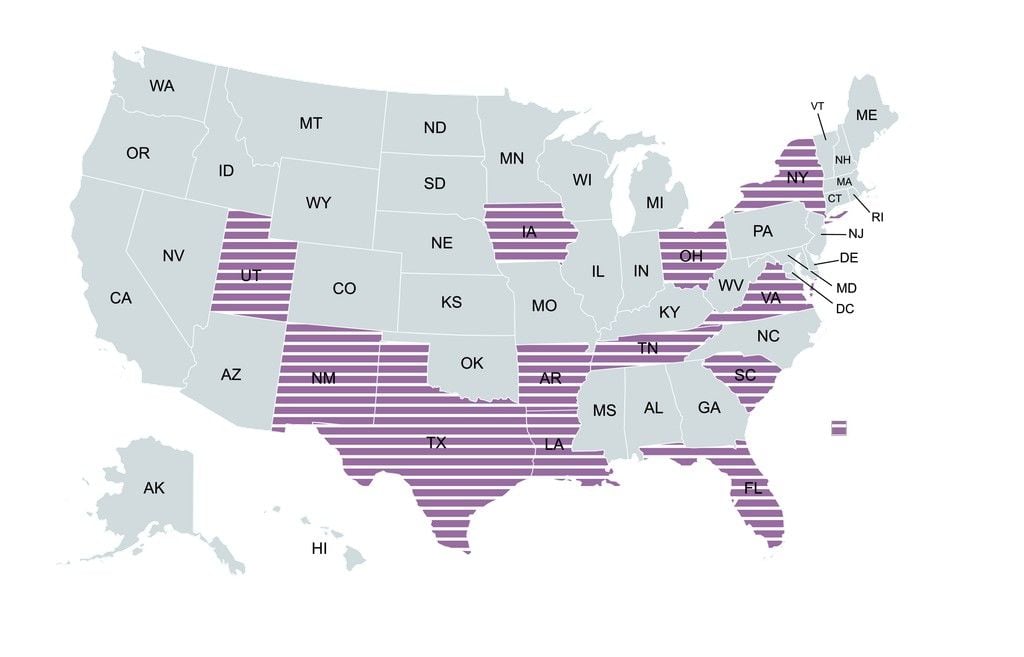
Arkansas
What began in late 2022 as a local controversy over LGBTQ+ materials in Arkansas libraries quickly developed into a broader statewide effort to restrict library content and reshape state library policy. In an op-ed published this month, Senator Dan Sullivan acknowledged that the October 2022 petition to defund the Jonesboro library due a 2021 Pride display was the trigger for his subsequent anti-library actions. Soon after Jonesboro, the Crawford County board required LGBTQ+ books to be moved to a separate section, and in February of 2023, Director Deidre Grzymala resigned due to board pressure.
In March 2023, Sullivan introduced and passed Act 372, prompting lawsuits including Fayetteville v. Arkansas. Parents also sued Crawford County. In Saline County, their board fired Director Patty Hector in October 2023 after she refused to remove LGBTQ+ books. Meanwhile, Jason Rapert joined the Arkansas State Library Board in December of 2023 and began pushing content restrictions as a condition of state funding. Lawsuits and funding disputes continued, and Act 372 was enjoined in December 2024.
In 2025, Sullivan unsuccessfully attempted to dismantle the Arkansas State Library, while Act 917 imposed new restrictions on certain materials in school libraries. A newly constituted State Library Board began rewriting state-aid rules in March of 2026, incorporating sweeping content restrictions. Although board members stated they did not intend to exclude minors from materials with “artistic and educational importance,” the draft rules would place any material containing a “description or image of human genitalia” in an adult section—far broader than the “books with images on the cover” they said they were targeting.
As another public-comment deadline approaches on September 29, 2026, the rules remain contested, while local libraries continue responding to the effects of Act 372 and related policies.
While the actions in Arkansas seem unrelenting, there are some sparks of light in this story. In August this year, Saline County settled with Patty Hector for $275,000. And after Ashley Burris, Director of the Lawrence County Library, made seemingly innocuous comments on Act 372, Dan Sullivan called her county judge demanding she be fired. She wasn’t.
For the librarians and advocates leading the Arkansas Right to Read Project, these moments matter. They are proof that speaking up can have an impact, and that the people fighting censorship are not powerless. The fight is far from over, but neither is the resistance. Every voice raised against these efforts is another spark of light keeping Arkansas from going dark.
Florida
Florida was among the first states to experience the coordinated wave of school censorship that started in 2021. The parents behind the Florida Freedom to Read Project saw firsthand how quickly it could move from a staged local controversy to systemic policy. After a 2021 orchestrated school board meeting spectacle over a graphic novel, public school parent Stephana Ferrell began researching public records that revealed a network of special interests working together to challenge books across Florida districts. The organization she now leads alongside Raegan Miller, another public school parent, ultimately documented how censorship campaigns, legislative action, and efforts to undermine confidence in public education became intertwined in Florida.
The strategy was never only about individual books. The special interest groups shared a goal of creating enough distrust in public schools to enable the easy passage of universal vouchers, which became law in 2023.
Five years into this censorship campaign, the consequences of that strategy are now being realized as districts face unrelenting pressure to over-comply while responding to mixed messages from the state in a desperate attempt to hold onto public trust. With more parents abandoning public schools for private options, Florida is in a downward spiral to full K-12 privatization.
Those funding dollars leave the public school system without accounting for the costs (buildings, utilities, labor, shared resources) that remain despite having one less child to educate. To compensate, funding for school libraries has been one of the first items to see major budget cuts ahead of the 26/27 school year. Secondary libraries are being repurposed. Some districts have lost dedicated library staff. Others cannot purchase new books. All of these efforts diminish the quality of education being offered to our public school students, but delay the harder conversations about which schools must close for the district to survive.
Despite this reality, many Floridians like Stephana and Raegan continue to advocate and try to stay hopeful.
“Efforts to pass additional K-12 censorship legislation since 2023 have largely failed and the general public, especially the vast majority of public school parents, have continued to support professional curation over district or statewide bans,” Stephana said.
Florida is a warning, but it is not inevitable. The parents started a national Freedom to Read Project and published a free guide, Turning the Page, to assist fellow advocates in and outside of Florida with building their own grassroots groups to meet this moment with a country-wide effort to protect the freedom to read, learn, and access information in our publicly-funded spaces.
Iowa
The people behind Annie’s Foundation were inspired into action in late 2021, after a member of Moms for Liberty challenged two books that were in a 10th grade curriculum: The Hate U Give and The Absolutely True Diary of a Part-Time Indian. Although the reconsideration committee recommended retaining both books, the decision was appealed to the school board. That chaotic public meeting included the use of racial and homophobic slurs. While the books were ultimately retained by the board, that experience convinced Sara Hayden Parris that someone needed to organize against the growing wave of book bans.
“No one was doing anything,” she recalled, so she gathered like-minded parents and helped create Annie’s Foundation.
One of the group’s biggest strategic victories came in Urbandale, when they obtained an overly-broad list of more than 300 titles slated for removal. The team was able to find a reporter interested in the story, and the list quickly attracted national attention. Within a week, the district backed down and restored access to more than 200 of the titles.
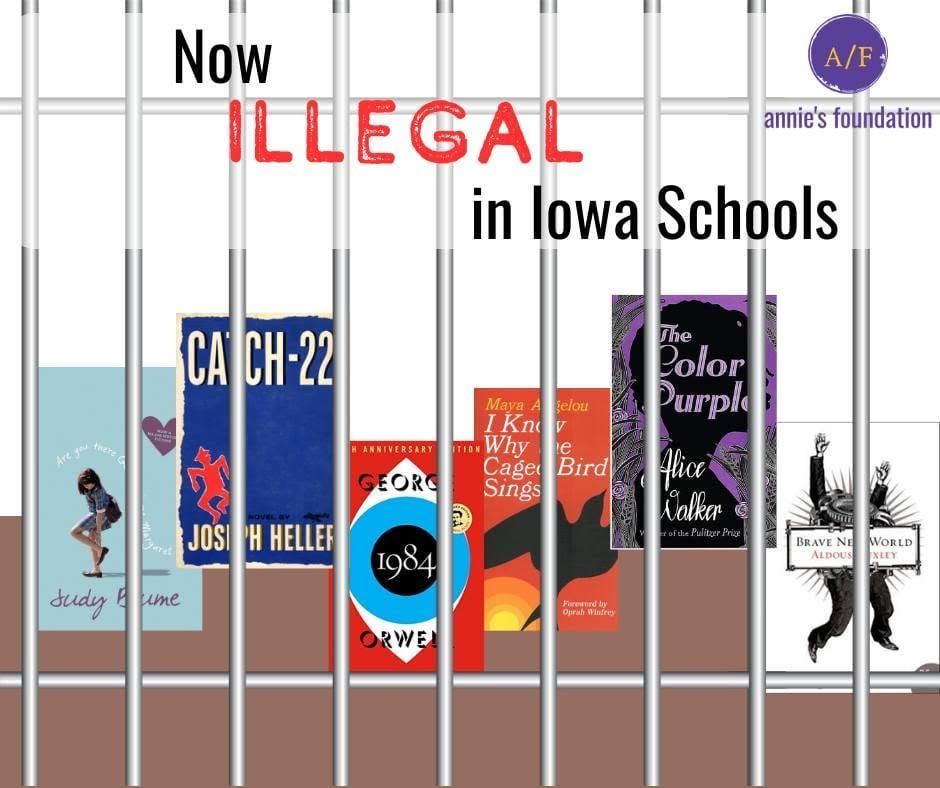
Research by Annie’s Foundation has since supported litigation against Iowa’s book banning law. The organization also advises teachers and librarians who are facing challenges, and they have distributed more than 22,000 free copies of banned or challenged books.
The work is not easy. Educators fear retaliation. Schools have resisted providing removal data. Thousands of books may have been removed since an injunction in the lawsuit was lifted. Yet, there are signs of momentum.
Several attempts to pass more pro-censorship legislation failed in the last legislative session. Members of Moms for Liberty suffered defeats in the last two rounds of school board elections. With an expanded nine-member board, a new grant supporting its office, and plans to reach more communities, Annie’s Foundation is turning grassroots resistance into a sustained statewide effort.
“I think one of the most unique things about Annie’s Foundation is our focus on getting books to people and the conversations we get to have with the thousands of people we interact with every day. We are recommitting to having as many conversations with people as we can to raise awareness of what is being removed from libraries,” Sara said.
Louisiana
Louisiana’s experience over the past five years shows both how quickly censorship efforts can escalate and what can happen when communities organize together.
Louisiana Citizens Against Censorship (LA CAC) grew out of local efforts to respond to increasing attacks on libraries and the freedom to read. Our first major legislative fight came in 2023, when we realized that multiple organizations were working independently and sometimes duplicating efforts. We knew we needed a unified strategy.
That became the turning point in 2024, when anti-library legislation took a much darker turn, including three bills that would have criminalized librarians. LA CAC and the Louisiana Association of School Librarians brought together public, school, and academic librarians, parents, community organizations, library leaders, and national partners. We coordinated our messaging, testimony, legislative outreach, and grassroots action across multiple parishes.
The response was enormous. More than 40,000 emails and phone calls were generated to legislators opposing the bills. Seven of nine anti library bills were defeated, and one of the two that passed was amended in the library’s favor. In effect, we successfully stopped or substantially changed eight of the nine bills we targeted.
After that epic loss for the anti-library effort, no new anti-library legislation appeared in Louisiana in 2025 or 2026. We never assumed the threat was gone. We watched the legislature meticulously and remained prepared to act, but the people who had been pushing these bills did not come back with another round.
We’ve also used that momentum to build beyond legislative advocacy. LA CAC continues to participate in book and reading festivals and educate communities about intellectual freedom. We recently launched an Action Fund Mini Grant program offering up to $500 to local grassroots organizers and small community groups to support projects promoting the freedom to read.
One of the most hopeful parts of this work has been watching people realize that their voices can make a difference. As LA CAC co-founder Lynette Mejía has said, “I feel like support for us and for this movement is growing.”
Louisiana’s biggest lesson is that organized, informed citizens can successfully push back against censorship. We remain vigilant, but we are also much better prepared and much more connected than we were five years ago.
New Mexico
In November 2024, Legacy Church, a megachurch in New Mexico, sponsored pastor John Amanchukwu’s attendance at an Albuquerque Public School board meeting. Amanchukwu, who calls himself the “book banning pastor” and lives in North Carolina, pushed for sweeping book bans throughout the district.
Earlier that year, Kit Rosewater, a New Mexico author, learned her debut middle grade book, The Derby Daredevils: Kenzie Kickstarts a Team, had been thrown into a dumpster at PS 55 in Staten Island, New York, along with a huge number of books featuring LGBTQ+ characters and marginalized characters. Her book had a sticky note on it with the presumable reason it was thrown into the garbage: “Discusses a dad being transgender. A teenage girl has a crush on another girl in her class.” The dumpster of books was found by a local news outlet and the incident made national news.
Over a year later, Kit was scheduled to do a school author visit in her hometown. But then a handful of parents at the school decided it would corrupt and harm their children because of her queer identity. These parents threatened the author and harassed the school librarian until Kit had to cancel the event for her and the students’ safety. After that incident, Kit became involved with advocacy groups working in New Mexico, and eventually formed the Freedom to Read New Mexico coalition. Their first meeting was on November 18, 2025.
Kit says that establishing a state-wide coalition with national partners has given freedom to read advocates in the state the power to speak up when the state’s librarians can’t because of the fear of losing their jobs. Partnering with librarians has made it possible to access their expertise and guidance in Freedom to Read New Mexico’s legislative drafts and forward movements. The organization is becoming more and more known throughout the state, and its members have made significant connections with legislators–both sponsors and committee chairs.
In New Mexico’s next legislative session (2027), Freedom to Read New Mexico will support three of Freedom to Read bills. Kit describes the legislation as safeguards that allow people to challenge books through processes that would properly document those challenges and ensure that all book challenges go through due process.
“By trying to pass this protective legislation, we are taking the offensive role in protecting the freedom to read. This way, when organizations like Legacy Church try to organize a similar stunt in the future, we are in a stronger position, with an organization ready in place not simply to protest their agenda, but to put our own plans forth to change New Mexico laws for the better,” Kit said.
The biggest obstacle to this legislation, according to Kit, is the state governor, who didn’t think censorship was a problem in New Mexico.
“That’s because the main kind of censorship our librarians are dealing with is undocumented censorship, where there is informal and/or internal pressure to remove or relocate certain titles,” she said.
There was also a prefiled bill in New Mexico’s 2026 session that would have assigned groups of parents to rate every book in their local New Mexico libraries the way movies are rated. Freedom to Read New Mexico believes a similar or identical bill will likely be prefiled in the 2027 session as well.
Freedom to Read New Mexico is trying to get a system in place to keep track of all challenges.
“Right now the vast majority are being swept under the rug, so our leaders don’t actually understand what a crucial this is for librarians, authors, and readers in the state,” Kit said.
This work has increased Kit’s understanding of the legislative process and the intricacies of New Mexico’s legislative system. She’s also learned so much more about the libraries in her home state. It has also benefitted her to be connected to a tight network of people who care deeply about protecting all voices and the freedom to read.
New York
“But I live in a blue state – that would never happen here” is a common refrain, but it isn’t an accurate one. Censorship doesn’t stop at state lines, as instances of censorship have happened in every state and in every type of community. The censorship efforts that people described in states like Utah, Iowa, and Tennessee are shared by communities in New York, California, and Illinois. Censorship efforts transcend political divisions and demographic differences.
In New York, we’ve seen some powerful examples of effective organizing and support in favor of people’s First Amendment right to read.
When school districts in the Hudson Valley censored Gender Queer in high schools, parents organized to prevent book banning in their schools. Karen Svoboda, Executive Director at Defense of Democracy, reported that in 2021, members of the group Moms for Liberty attempted to join her community’s school board in Wappingers Falls. When they tried to start censoring books in libraries, Svoboda started Defense of Democracy. Using her expertise in community organizing, she led a successful campaign that doubled voter turnout, and voters came out en masse to protect the freedom to read.
Defense of Democracy has raised community support for libraries and led to more local participation in community school boards. They’ve done workshops and created materials that help maintain the separation between church and state and prevent religious viewpoint discrimination in Hudson Valley classrooms. They’ve also created materials that explain LifeWise and Club America for school board members and meetings.
Svoboda says that funding is their biggest obstacle. They started with a few donations, but haven’t secured grant funding. Meanwhile, donations have grown more scarce as the fight against censorship has continued. Meanwhile, groups like Moms for Liberty, LifeWise, Club America, and Turning Point USA seem to have a deep well of funding, which is “both galvanizing and exhausting,” according to Svoboda.
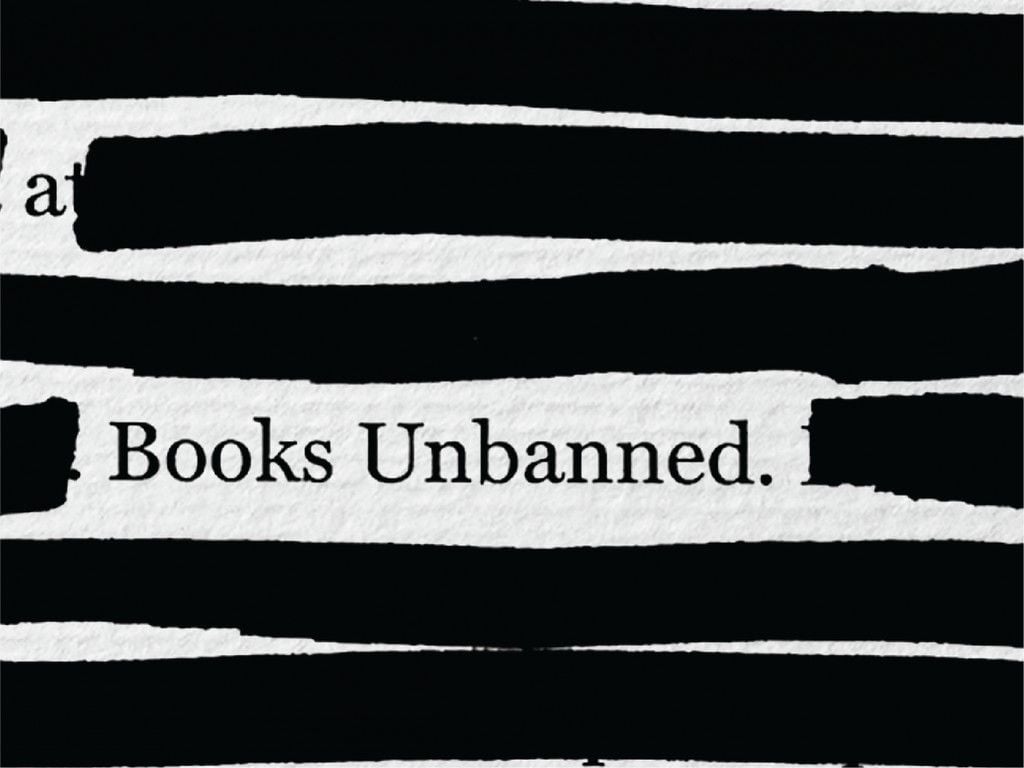
Even in places less directly impacted by these types of censorship organizations, libraries and locals are engaging in projects and programs to help ensure that everyone in every community has access to library materials. Perhaps the most robust program is Books Unbanned, a project led by Emma Eriksson at Brooklyn Public Library. Eriksson began working with Books Unbanned in 2024, as the library’s Manager for Youth Civic Engagement and Expression. Books Unbanned provides free digital library cards to teens and young adults anywhere in the United States so they can access all the digital collections of the Brooklyn Public Library.
So far, Books Unbanned has received 12,252 card applications and circulated 483,647 books. It’s expanded to five partner libraries who provide cards to teens and young adults as well. Eriksson and Brooklyn Public Library also have Freedom to Read Teen Ambassador programs that teach teens about intellectual freedom and give them the tools and resources they need to be library advocates.
Like Svoboda mentioned, Erickkson’s biggest obstacle is also funding, as well as apathy and crisis overload. As the push to censor materials persists, outside founders seem to be falling back.
Ohio
Two advocates from Ohio shared their experiences over the last five years, and they highlight how different–yet important–a variety of approaches is.
Sharon Hawkes, who leads Right to Read Ohio with EveryLibrary, says that Ohioans aren’t aware of how much censorship has reached their state. Hawkes points to the need for more legal help to oppose censorship, and she says that learning more about the applicable laws was helpful. After participating in the American Library Association’s Law for Librarians program, Sharon felt equipped to assist Ohio’s librarians when they faced intellectual freedom quandaries and to educate communities across the state about First Amendment law and the right to free expressions.
Ashley Hope Pérez, another Ohioan, was surprised when her novel Out of Darkness became one of the first books targeted in the current wave of censorship that began in 2021. She tried to use that experience as an opportunity for advocacy. From Ohio State University, where she is a professor, she has developed collaborations with authors, community advocates, and educators all over the nation. She edited the book Banned Together and leads the Unite to Read Project, an initiative to respond to censorship with pro-literacy advocacy.
Ashley cites fatigue, overwhelm, and limited time as persistent obstacles. Isolation, shock, and feeling responsible for redressing ignorance and misunderstanding were her biggest challenges in facing censorship of her work. She’s learning to embrace and embody a sustainable advocacy model. Initially, her advocacy was driven by fear–fear that students would not be protected, fear that her book’s reputation would be destroyed, fear that the false narratives would “win.” All of these fears created a sense of urgency and compulsion.
While Ashley was still an effective advocate through her fear, it didn’t feel good and left her feeling anxious and depleted. She says that a more deliberate approach to her advocacy efforts has changed those feelings.
“A big shift has been focusing on what I can do that truly patterns into my strengths, values, and sources of joy. I am more able to shift away from areas that are too anxiety-producing for me (like protest spaces) and ground my efforts where I can be both effective and enlivened,” she said.
South Carolina
As censorship accelerated in South Carolina, Jamie Gregory, the 2022 South Carolina School Librarian of the Year, found herself becoming a public voice in the fight against censorship. After experiencing personal attacks from a sitting state senator for resisting efforts to censor the shelves of her private school library, Jamie took on the role of President of the South Carolina Association of School Librarians for the 24/25 school year and co-created Freedom to Read SC. Both of these new roles came as South Carolina’s Board of Education gave itself the authority to demand statewide book removals from all public schools.
Jamie sees the creation of Freedom to Read SC as a victory itself, noting that “No more books have been banned statewide by the SC State Board of Education during the 2025-2026 school year.”
The coalition is building resources, advocating for intellectual freedom, and preparing for another push for legislation protecting the freedom to read. Jamie’s story illustrates how censorship can transform ordinary professionals into determined defenders of civil liberties.
Mikayla Mangle of the ACLU of South Carolina encountered the fight from another front: public libraries. In Pickens County, a library board changed its collection policy despite community opposition, creating a pathway for books to be removed from children’s and teen sections based on claims about “prurient” material.
“The policy is a direct attack on libraries and community members’ first amendment rights,” said Mikayla. Evidence points to the policy being used to target LGBTQ+ characters and themes, and the public has noticed.
While organizing rural communities to combat censorship can be difficult, Mikayla has witnessed the power these communities have when pushing back. In Pickens, advocates organized a screening of The Librarians, a documentary about librarians and activists defending constitutional rights. Despite the area’s reputation for limited political activism, the event drew a huge crowd. Mikayla says the turnout demonstrated that people of different backgrounds and generations are willing to stand together for “the people’s constitutional rights to speech and to access information.”
Her experience has also reinforced the importance of showing up at library board meetings, community events, and protests. These efforts can connect people who may not otherwise see themselves as activists.
The challenges in South Carolina remain significant. Both Jamie and Mikayla worry that talented librarians will leave–or never enter–the profession due to the rhetoric and ideological threats at play. Their message is ultimately one of determination and hope.
“The fight against censorship in South Carolina is still very much ongoing. However, the amount of support from community members of all backgrounds and generations has been amazing to see,” Mikayla said.
Censorship may be spreading, but so is the willingness to fight back.
Tennessee
When book banners came for Rutherford County Public Libraries in August of 2023, “two angry moms” were ready to meet the moment. Keri Lambert and another parent started to push back in a very public way. They quickly became a formal non-profit, Rutherford County Library Alliance, with a five-member board, hundreds of supporters, about 40 sustaining members, and more than 1,500 email subscribers.
By winter of 2024, the organization successfully stopped two anti-library bills in the Tennessee Education Committee. Their advocacy also helped bring national attention to censorship efforts in Rutherford County, where a lawsuit filed by the ACLU and local attorney Kerry Knox challenges book bans in their public schools. The school board had paused its efforts while the case moves forward. Meanwhile, the public library board has amped up its efforts, making it the Alliance’s primary focus.
While the Tennessee Age Appropriate Materials Act (2024) only applies to school libraries as written, it is being used by book banners to coerce censorship in public libraries as well.
Keri and the rest of the Alliance are up against a well-funded and well-organized effort tied to a megachurch in the state that frames book removal as “biblical war” and labels censorship opponents as “demons.”
“They even had an exorcism during public comments at a school board meeting banishing us from Rutherford County,” Keri said.
Advocates have faced intimidation, threats, harassment, and efforts to target local businesses that support the Alliance. Despite those pressures, public participation has grown dramatically, with hundreds now attending library board meetings in support of access.
The Rutherford County Library Alliance sees litigation and investigations as essential tools for stopping officials who, as Keri says, have essentially told advocates, “you have to sue us.” Yet the movement’s growth itself is a strategic win.
As more residents show up, organize, and demand accountability, the campaign is building the public pressure and legal momentum needed to protect Tennessee’s libraries and the freedom to read.
Texas
Texas is an epicenter for censorship efforts. Freedom to read advocates have been fighting legislative and ground-level efforts to remove books from libraries, classrooms, and local bookstores. Books have been taken off their shelves at the behest of library boards and school administrators. New laws have created confusion about what people can and cannot access in their school and public libraries. In one case, the Fifth Circuit even questioned whether people have a right to read in libraries, upending First Amendment principles.
Texas’s censorship efforts come from a small, vocal group of political activists and pressure groups, including Moms for Liberty, Citizens Defending Freedom/Remnant Alliance, Protecting Texas Children, Sub-Committee Stop Sexualizing Texas Kids, and Bookmarked/OnShelf. Leaders of these tiny but coordinated organizations travel the state together, bombarding school board and local public library advisory and city council meetings. They read book excerpts from young adult and adult-level books out of context, with the intention of shocking and shaming leaders into restricting and removing the books they find objectionable. Their primary targets are books that center LGBTQ+ and BIPOC stories, stories of sexual abuse survivors, and books about political and religious violence. They use and promote websites like Rated Books and BookLooks and are increasingly using AI tools like ChatGPT to accelerate removals. School board trustees are even feeding their districts’ book purchase request lists through ChatGPT and other AI platforms and tools in an attempt to filter out books that AI deems “non-compliant” with local policies and state laws.
These vocal censorship groups have supported legislation that codifies censorship into state law, including SB 3 which limits instruction on “controversial issues”; HB 900 (“The READER Act”), a law requiring vendors to rate books sold to school districts as “sexually explicit” and “sexually relevant”; SB 12, which prohibits teaching topics considered “DEI” and bans student-led gender/sexuality alliance and LGBTQ+ pride clubs; SB 13, which allows school boards to establish “school library advisory councils” to root out “profane” and “indecent” content in schools; and SB 20, which bans the possession or promotion of obscene visual material “appearing to depict a child.” Since it passed, the law has been cited in reference to restrictions and removals of manga. It’s a significant slate of laws, especially as Texas legislative sessions occur biannually.
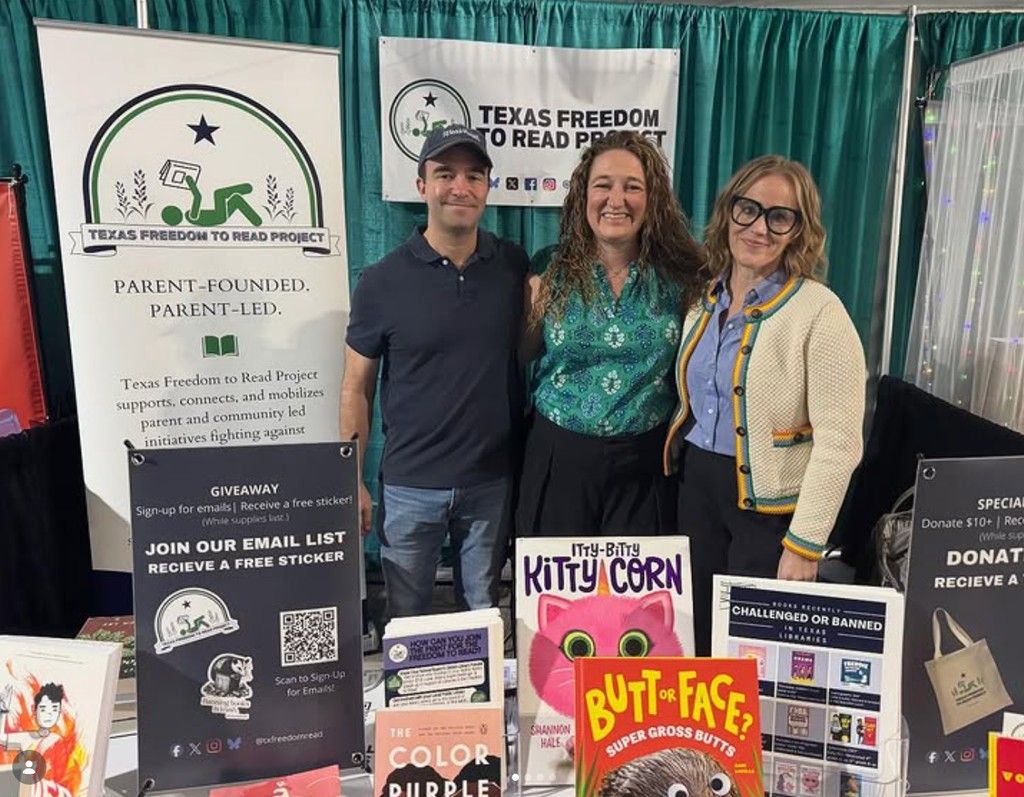
Texas communities are launching robust grassroots efforts to counter these attacks on free expression. In 2021, parents including Anne Russey, Laney Hawes, and Frank Strong started seeing Twitter trolls, politicians, and pressure groups launch social media attacks against their children’s school teachers and librarians. These attacks were personal, and they undermined public education and the freedom to read. It didn’t take them long to realize that the efforts to impede students’ rights to read weren’t isolated incidents- but well-funded, coordinated attacks. To them, it was clear that the best way to counter those efforts was to organize and fight back, so they launched the Texas Freedom to Read Project in November 2023.
Since then, Texas Freedom to Read has been one of the groups at the helm of statewide efforts to protect the freedom to read. They update citizens and disperse calls to action which inform and mobilize thousands of Texans about pro-censorship and anti-freedom to read related bills being considered during the 89th legislative session. They write public testimony in opposition to bad bills introduced in the Texas legislature and work with Texas FReadom Fighters to ensure citizens know what’s happening to their constitutional freedoms in the state.
Texas’s biggest obstacle is its size. With over 1200 school districts and hundreds of public libraries, it’s impossible to keep tabs on what’s happening in every Texas community. Without oversight, book bans often happen without anyone knowing. Instead of being transparent and following proper procedures for requests to reconsider books or formal book challenges, books are removed in response to “internal reviews” and “informal reviews.” School districts say they must remove thousands of books to “comply” with state laws. Public library systems like Victoria Public Library cave to pressure from pressure groups to remove LGBTQ+ and BIPOC titles from their collections.
By connecting local communities on a state level, Texas advocates have been able to raise awareness and bring attention to sweeping book removals from school libraries, elevated concerns from librarians about the harmful impact of state laws, and stories from local communities pushing back against book bans and censorship.
“We’re proud of the work we’ve done to build relationships with allies and advocates across the state and the country. We’ve been able to leverage those relationships strategically to obtain national and international media coverage of the ways censorship and book bans are impacting Texas- and America,” said Anne. “The friendships we’ve made keep us hoping, laughing, and fighting for an end to all of this madness even on the worst days.”
Utah
As a result of new state laws in Utah, including House Bill 29, book censorship decisions in a few school districts impact what’s available on all school library shelves in the state. To date, the state has banned nearly 40 unique titles from all public school library shelves.
In Davis School District, attorney and mother Jessica Horton remembers “learning about book bans in Utah from reading news articles as I breastfed my baby. I heard about Let Utah Read on social media and participated in their statewide actions. But it seemed like no one was taking any action in Davis School District, the main district with book bans in Utah, which is also where my children attend school.” That realization became Let Davis Read, a grassroots effort to challenge bans, inform the public, and give voice to librarians and community members who may be afraid to speak publicly.
Jessica describes the fight as painfully slow, saying it often feels like she is “just throwing sand in the gears” to slow censorship efforts. Yet those grains of sand matter. Let Davis Read has helped mobilize community members, inform the work of journalists, push the district toward greater transparency, and save books through appeals. Jessica says she has also heard that district librarians are grateful for the advocacy because “they’re too afraid to speak up in fear of losing their jobs.” Her hope is simple but powerful: “one day we’ll have enough grains of sand to finally stop the book banning machine.”
That same determination drives Susan Hiner, Administrative Director of Let Utah Read. Susan says books have always been her friends and that they helped her understand herself and the world.
“I fervently believe that everyone deserves to have stories that they can see themselves in,” she said.
For Susan, success isn’t measured only by legislation or books saved; it happens every time someone learns what is happening and asks, “What can I do?” That question reflects the growing community of Utahns who are choosing to defend the freedom to read rather than stand by as censorship expands.
There are reasons for hope. Let Utah Read successfully fought a really bad bill, HB 197.
“One representative said that she received 400 emails about that bill. The sponsor, Nicholeen Peck, was forced to go through 4 revisions before the bill made it out of Committee. The final version was completely defanged. It started out as a dragon, but it left Committee as a lizard,” Susan said.
Advocates from across the state are also using public-records requests to expose how inconsistently districts are applying the law. Susan says districts are operating in a “higgledy-piggledy manner,” creating an opportunity to demand that they follow their own procedures. As she puts it, “the best part about fighting against book bans are the people in this work.”
Their stories show that resistance to censorship doesn’t always begin with a large organization or sweeping victory. Sometimes it begins with one parent, one librarian, or one citizen deciding that something is wrong and choosing to act.
Virginia
Virginia’s libraries have experienced censorship attempts since early 2021, being among the earliest to report them to the media. Retired school librarian Kim Dare experienced it firsthand while working at a high school in Fairfax County, whose school division is the ninth largest in the country. She describes what happened in 2021 after she selected Gender Queer for the high school library. She read the graphic novel and felt that it was a story that would resonate with high school students.
Gender Queer was challenged publicly by a parent during a School Board meeting, and the superintendent of Fairfax County Public Schools (FCPS) decided to remove the book during the time that it was undergoing review. This removed its access to all students before any decision about the book’s future was made.
The review consists of division staff, two teachers randomly selected from names that are submitted each school year, two librarians randomly selected from names that are submitted each school year, and two senior students randomly selected from names that are submitted each school year. Kim was one of the two librarians on the review committee.
After thoughtful conversations about the concerns and arguments on both sides, the committee decided unanimously that the book should remain on high school library shelves. The library director at the time later then also amended the FCPS regulation dealing with challenged books to specify that challenged books would remain available during the time that the challenge is being reviewed. This amended regulation was approved by the School Board.
Despite the school district’s affirmation of the right to read in its libraries, parents continued to try to censor school materials, following the playbook of national organizations. These efforts have met some success in other districts. Hanover County, Rockland County, and Goochland County have removed numerous books from their public libraries.
America First Legal recently filed complaints against FCPS with the US Department of Education and US Department of Justice regarding FCPS’s protection of gender-expansive and trans students’ rights. Groups like FCPS Pride and the student-led Pride Liberation Project counter the efforts to ban books and raise awareness about the censorship attempts in the school district.
As censorship has become more prevalent, Kim has observed that more risk-averse librarians and administrators are choosing not to purchase books that they might have previously. FCPS’s roughly 180 librarians have regular professional development meetings, and casual conversations reveal a broad range of philosophies around what they’re confident about purchasing. Kim participated in the American Library Association’s Office of Intellectual Freedom’s Law for Librarians course, which gives her the knowledge and opportunities to speak to groups in Virginia and DC about the legal requirements associated with access to information in libraries.
Kim highlights the importance of increasing communication and awareness. She urges everyone who cares about school libraries to ensure that the concept of “parent rights” means ALL parents, not only the parents who are trying to control what other families read.
Now: Take Action
You’ve heard the stories about other schools and libraries. But do you know what’s happening in your state? In your library?
The movement of censorship is in fact happening across the country, in red states, in purple counties, and in blue places. It looks different–in Florida and Texas is amplified by legislation while in New York, it is driven by group organizing. But it is still happening and yes, it’s in your backyard.
It’s time to get active and the work of fighting censorship starts with you.
There are so many resources out there. While you might feel overwhelmed, do it anyway. The work begins with one step, and once you take that first step, it only gets easier to keep walking.
Start with finding a freedom to read organization in your region or state, then offer to give it time, talent, and/or money if you can.
How do you do that? Start with the Freedom to Read Project.
Next, do something. Unsure what to do first? Read this article and pick a task: 60+ Small Tasks to Defend the Right to Read: Book Censorship News, January 9, 2026. While you are there, sign up for Book Riot’s Literary Activism Newsletter to stay on top of the latest in book censorship news.
An excellent book that can help you get started is Read Ban This!: How One School Fought Two Book Bans and Won (and How You Can Too) by Patricia A. Jackson, Ben Hodge, Olivia Pituch, Edha Gupta, Christina Ellis, and Renee Ellis. Not only will you have a road map to getting active in your community, but you’ll get inspired by the work of students and teachers, for whom this censorship is especially personal.
Book censorship looks different in different states but what doesn’t change is the impetus behind it–to take away stories and erase people. Here are some more starting places, based on what your relationship to books, libraries, and schools may be.
- Authors and illustrators – Join Authors Against Book Bans.
- Community Members, whether you’re grandparents, parents, students, or taxpayers without children – Check out Freedom to Read Project’s guide, Turning the Page and connect with the National Coalition Against Censorship.
- Librarians and Library Workers – Make sure you are connected to the American Library Association and EveryLibrary.
- Booksellers – Build your familiarity with the American Booksellers’s freedom to read resources.
- Educators – Check out your national groups like the National Education Association, National Council of Teachers of English, Everyday Advocacy, or the Zinn Education Project.
- Every American who can – vote. Vote for the Freedom to Read. Vote for libraries. Vote for readers. Vote for public education. Your vote matters.
We need you–today–in the fight against censorship. The time to be active is now. We are stronger together.



Share on: