


Colin Kaepernick on the Books that Changed his Life

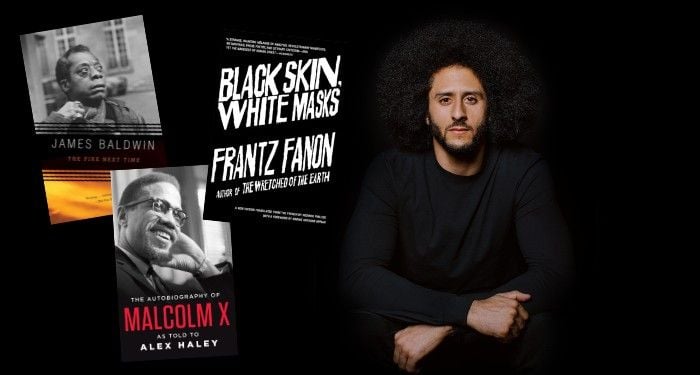
Super Bowl quarterback Colin Kaepernick sparked a national conversation about police brutality against Black and Brown people when he took a knee during “The Star-Spangled Banner.” His memoir, The Perilous Fight, is out this week from Legacy Lit. Below is an excerpt about the books that changed his life and helped inspire him to speak out about injustice. (Photo credit: Amari Kenoly.)
On one trip, she gave me a copy of The Autobiography of Malcolm X. I’d let it slip that I had never read it, and she was adamant that I’d be forever changed once I did. Nessa had grown up in a very pro-Black household. Her parents had exposed her to figures like Muhammad Ali and Malcolm X, telling her that they were amazing people who had changed the world. That’s how I’d viewed Allen Iverson and Randy Moss growing up. They’d changed my world and opened a window into my own Blackness. Ali and Malcolm were men who sacrificed everything for their beliefs. They were men of uncompromising integrity who deeply loved their people.
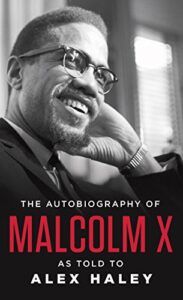
“I just feel that you would love the story of Malcolm X and his evolution because I can see that you are evolving,” Nessa said. “I see how the sports world is treating you, and it is so different than the person I’m getting to know. We can’t be talking about the same Colin Kaepernick! We can’t be talking about the same guy who’s so caring and compassionate. The media is saying all these crazy things about you, like you don’t care about football. I was like, he cares so much about football that it’s annoying. It just bothers me.”
The Autobiography of Malcolm X turned out to be pivotal in my development intellectually. Reading Malcolm opened my eyes to the pervasiveness of white supremacy. I began to look at my world differently. It sent me down a path of self-discovery as I threw myself into works that fed my soul. Some of the books I devoured during this period were The Wretched of the Earth and Black Skin, White Masks by Frantz Fanon; Revolutionary Suicide by Huey P. Newton; and The Fire Next Time by James Baldwin. Nessa, who had graduated from Berkeley, even reached out to some of her old professors for recommendations.

The books, particularly Malcolm X’s, gave me a framework and context to understand many of the experiences I had had in my life immersed in a white world. In my household, in a town such as Turlock, in the schools I attended, people like Malcolm X were seen as bad, dangerous. Malcolm was the angry Black man. The Black Pan- thers were a terrorist group. Growing up, I had no reason to question these characterizations. School was a place that was supposed to help me get smarter, so I figured everything I learned there was truth. Why would they lie to me? Why would they give me bad information? Even though I was sure of my Blackness, I was thoroughly indoctrinated into a Eurocentric view of the world—one that reflexively made Blackness synonymous with negativity. At the University of Nevada, the Black student population was typically well under 5 percent, so there wasn’t much of a push for African American studies. Besides, I was a business major, and aside from my time learning with the Kappas, I was far from any class that would be exploring Black history.
The timing of this awakening was powerful for me because I had spent the spring of 2015 ensnared in something of an existential crisis. I spent my off-season training days pushing through strenuous workouts at a facility in Scottsdale called Exos, then I would return to the apartment I was renting. Eat, sleep, repeat. I was twenty-seven, sitting on the couch and grappling with questions like Why do I do what I do? The questions weren’t particularly connected to football; I was pondering the meaning of my life. Is this it—football and food? I had achieved my loftiest goal—starting NFL quarterback. I had already played in the Super Bowl. Did I have anything else to offer the world? Even though I didn’t drink frequently, at this point I stopped drinking at all. I was asking myself, What was the purpose; how did it benefit me? Anything that wasn’t moving me forward needed to be removed. I haven’t had a drink since.
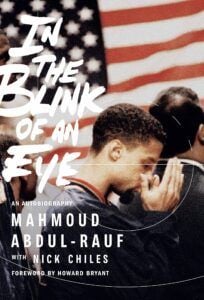
As the season started up, I continued to read. During team flights, I’d be in my seat reading a book instead of watching movies or bullshitting with my teammates. I couldn’t get enough of the literature, but soon, my reading began to cause a bit of tension with some of my teammates. Something about seeing a guy trying to feed his mind can be intimidating to some guys. They would make snide comments that had a definite subtext: Oh, so you think you’re better than us? I’m reminded of the reaction that former NBA star Mahmoud Abdul-Rauf got in the 1990s from his Denver Nuggets teammates when he started reading books around them. His story resonated with me so much that I later published his memoir, In the Blink of an Eye, through my company, Kaepernick Publishing.
I was undergoing an evolution in how I looked at my world. I made a conscious effort to no longer accept the normalization of the degradation of Black people that I would hear in casual conversation. I stopped saying the word nigga when joking around with friends. I confronted a few guys and asked them why they continued to use that word when they knew what it represented. As you can imagine, those kinds of questions would make people profoundly uncomfortable. Yeah, I became that guy.
When one of my teammates came off the practice field and proceeded to make fun of his unruly mane of hair by saying something like, “Man, my shit ugly. Nappy as hell.” I stopped and asked him a question. “Who said nappy hair is ugly? Who told you that?” He didn’t have an answer. But I could tell I was getting through to some of them. People were starting to think about what I was saying. I was tactful about it—I wasn’t going to run up in some dude’s face and be like, “Hey, don’t say that!” No, I was always going to mind my business. But when it was addressed to me, I would have something to say.
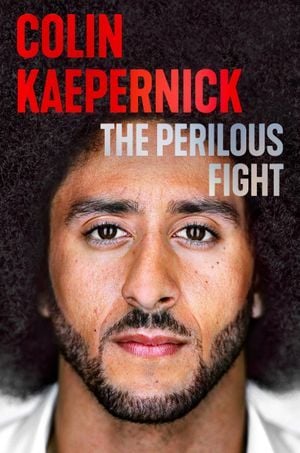
Excerpted from THE PERILOUS FIGHT. Copyright © 2026 Colin Kaepernick. Published by Legacy Lit, an imprint of Grand Central Publishing, a Hachette Book Group company. Reproduced by arrangement with the Publisher. All rights reserved.
For more like this, sign up for the Book Riot Newsletter!






Share on: